
Typical vinyl siding cost sets the stage for this enthralling narrative, offering readers a glimpse into a story that is rich in detail and brimming with originality from the outset.
As we delve into the factors, types, additional expenses, and tips related to vinyl siding costs, a world of insights and revelations awaits.
Factors impacting typical vinyl siding cost
When considering the cost of vinyl siding, there are several factors that can influence the final price you pay. These factors include the quality of the materials used, the size of the area to be covered, the complexity of the installation process, and regional pricing norms.
Material Quality
The quality of the vinyl siding material you choose can have a significant impact on the overall cost of the project. Higher quality materials are often more expensive but can offer better durability, aesthetic appeal, and longevity compared to lower-quality options.
Area Size
The size of the area to be covered with vinyl siding will also affect the cost. Larger areas will require more materials, labor, and time to complete, resulting in a higher overall cost. It is important to accurately measure the square footage of the area to be covered to get an estimate of the total cost.
Installation Complexity
The complexity of the installation process can impact the cost of vinyl siding. Factors such as the presence of obstacles, architectural details, or the need for special equipment can increase the labor and time required for installation, leading to higher costs.
Location and Regional Pricing
The location of your property and regional pricing norms can also play a role in determining the final cost of vinyl siding. Labor costs, material availability, and market demand can vary from one region to another, affecting the overall price you may pay for the project.
Types of vinyl siding and their cost differences
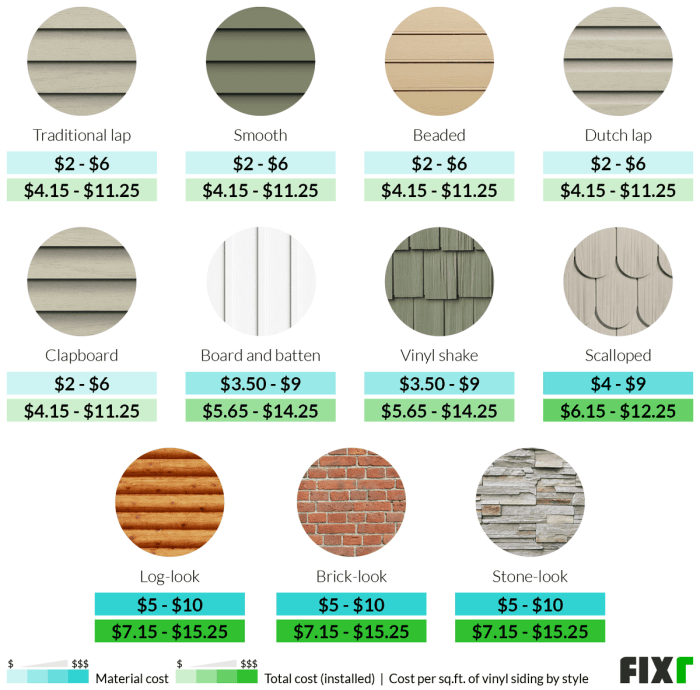
When it comes to vinyl siding, there are various types available in the market, each with its own unique characteristics and price points. Understanding the differences between these types can help you make an informed decision based on your budget and preferences.
Styles and finishes
- Traditional vinyl siding: This is the most common type of vinyl siding, known for its affordability and ease of installation. It typically comes in a range of colors and textures to mimic the look of wood.
- Architectural vinyl siding: This type of siding features deeper grooves and more realistic wood grain patterns, giving it a more upscale appearance. As a result, it tends to be more expensive than traditional vinyl siding.
Insulated vs. non-insulated vinyl siding
Insulated vinyl siding comes with a layer of foam insulation attached to the back of the panels, providing additional thermal protection and energy efficiency. While the upfront cost of insulated vinyl siding is higher than non-insulated options, it can lead to long-term savings on heating and cooling bills.
Brand reputation
The reputation of the vinyl siding manufacturer can also impact the cost. Well-known brands that have a reputation for quality and durability may come with a higher price tag compared to lesser-known brands. However, investing in a reputable brand can provide peace of mind in terms of product performance and longevity.
Additional expenses beyond the basic vinyl siding cost
When considering the cost of vinyl siding, it's essential to account for additional expenses that may arise beyond the basic material cost. These extra costs can significantly impact the total amount you will need to budget for your siding project.
Trim, Soffits, and Fascia
- Trim: Trim pieces are necessary for finishing edges and corners of your siding, providing a polished look. The cost of trim varies depending on the material and style, but it's an important accessory to consider.
- Soffits: Soffits are essential for ventilation and aesthetics underneath the eaves of your roof. The price of soffits can differ based on the material and size needed for your home.
- Fascia: Fascia boards are used to create a smooth appearance along the roofline. The cost of fascia boards can vary depending on the material and width required.
Pricing Differences for Accessories
- Corner Posts: Corner posts are used to cover the exposed edges of your siding at corners. The cost of corner posts can vary based on the material, size, and design chosen for your home.
- Mounts: Mounts are necessary for attaching lights, address numbers, or other decorative elements to your siding. The price of mounts can vary depending on the style and material.
Labor, Permits, and Disposal
- Labor: The cost of labor for installing vinyl siding can vary based on the size of your home, complexity of the project, and local labor rates. It's important to factor in labor costs when budgeting for your siding project.
- Permits: Depending on your location, you may need permits for siding installation. Permit costs can add to your overall expenses, so it's essential to check with local authorities.
- Disposal: Disposing of old siding and construction debris can also incur additional costs. Whether you hire a waste removal service or handle disposal yourself, it's crucial to include these expenses in your budget.
Cost Implications of Upgrades
- Decorative Features: Upgrading to premium or customized vinyl siding options with decorative features can increase the overall cost of your project. While these upgrades can enhance the aesthetic appeal of your home, they come with a higher price tag.
Tips for cost-effective vinyl siding installation
When it comes to installing vinyl siding, there are several strategies you can use to ensure you get the best value for your money. From negotiating pricing with contractors to timing your installation correctly, these tips can help you save costs in the long run.
Negotiating Pricing with Contractors
- Obtain multiple quotes from different contractors to compare pricing and services offered.
- Ask for discounts or promotions that may be available for new customers or off-season installations.
- Consider negotiating a lower price if you are willing to be flexible with the timeline of the project.
Timing Your Installation to Save Costs
- Plan your installation during the off-peak season when contractors are less busy and may offer lower prices.
- Avoid scheduling your installation during peak times like summer when prices tend to be higher due to high demand.
- Be aware of any seasonal promotions or discounts that contractors may offer during slower periods.
Benefits of Bundling Services for Cost Savings
- Consider bundling your vinyl siding installation with other home improvement projects to receive a discounted rate.
- Ask your contractor if they offer package deals for multiple services, such as roofing or window replacement, to save on overall costs.
- Bundling services can also streamline the installation process and save time and money in the long run.
Proper Maintenance to Reduce Long-term Replacement Costs
- Regularly inspect and clean your vinyl siding to prevent damage and prolong its lifespan.
- Address any repairs or issues promptly to avoid costly replacements down the line.
- Invest in proper maintenance tools and materials to keep your vinyl siding in top condition for years to come.
Final Conclusion
In conclusion, the exploration of typical vinyl siding cost unveils a tapestry of considerations that paint a comprehensive picture of this essential home improvement aspect. Dive into the realm of vinyl siding costs armed with knowledge and confidence.
Key Questions Answered
How does material quality impact vinyl siding cost?
Higher-quality materials can increase the overall cost due to their durability and aesthetic appeal.
Are there significant cost differences between insulated and non-insulated vinyl siding?
Insulated vinyl siding tends to be more expensive due to its added energy efficiency benefits.
What are some additional expenses beyond basic vinyl siding cost?
Additional costs may include trim, soffits, fascia, corner posts, mounts, labor, permits, disposal of old materials, and optional decorative features.
How can proper maintenance reduce long-term replacement costs?
Regular upkeep and maintenance can prolong the lifespan of vinyl siding, reducing the need for costly replacements in the future.